Federal OSHA and ANSI Z358.1 standards require all campus eyewash equipment to be readily accessible, routinely inspected, and immediately operable in the event of chemical exposure.
Emergency Response: What to Do in a Chemical Exposure
⚠️ IN CASE OF CHEMICAL EXPOSURE DO NOT CLOSE OR RUB YOUR EYES OR SKIN!
- SHOUT FOR HELP: Alert nearby colleagues or students immediately.
- ACTIVATE EQUIPMENT IMMEDIATELY
- Eyewash: Push the lever/paddle or pull the tray.
- Safety Shower: Pull the overhead triangular handle downward fully.
- BEGIN FLUSHING
- Eyes: Hold eyelids open with fingers. Roll eyes continuously in the stream.
- Body/Shower: Stand directly under the shower head spray pattern.
- REMOVE CLOTHING & CONTACTS: Strip off contaminated clothing, shoes, and contact lenses while under the water stream to prevent chemical trapping.
- FLUSH DURATION
- Plumbed Units & Showers: Flush continuously for at least 15 minutes.
- Personal Eyewash Bottles: Squeeze into eyes continuously while walking to a primary 15-minute station.
- SEEK MEDICAL CARE: Call Public Safety at (541) 463-5555. Bring the chemical Safety Data Sheet (SDS) to the medical provider.
Don't forget to report the accident promptly.
Eyewash Equipment Comparison & Inspection Matrix
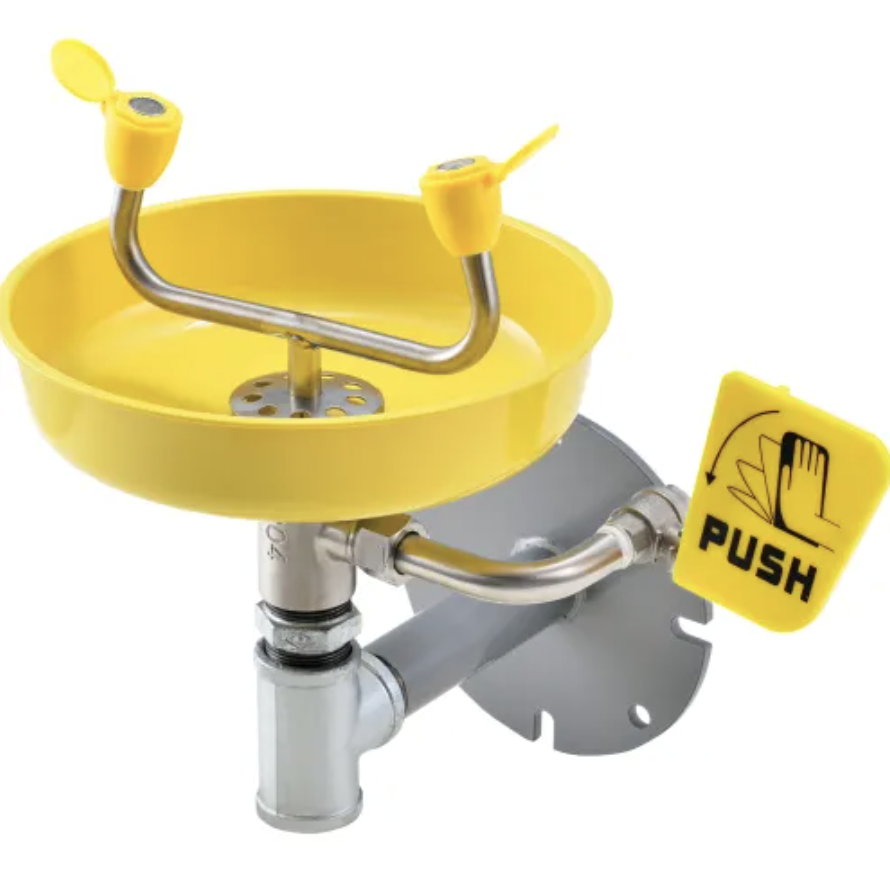
Lane Community College utilizes three distinct types of eyewash stations across campus buildings and remote sites. Use the guide below for testing and maintenance rules:
| Station Type | Example Image | Primary Function | Maintenance / Inspection Requirement |
|---|---|---|---|
Plumbed Stations
| 
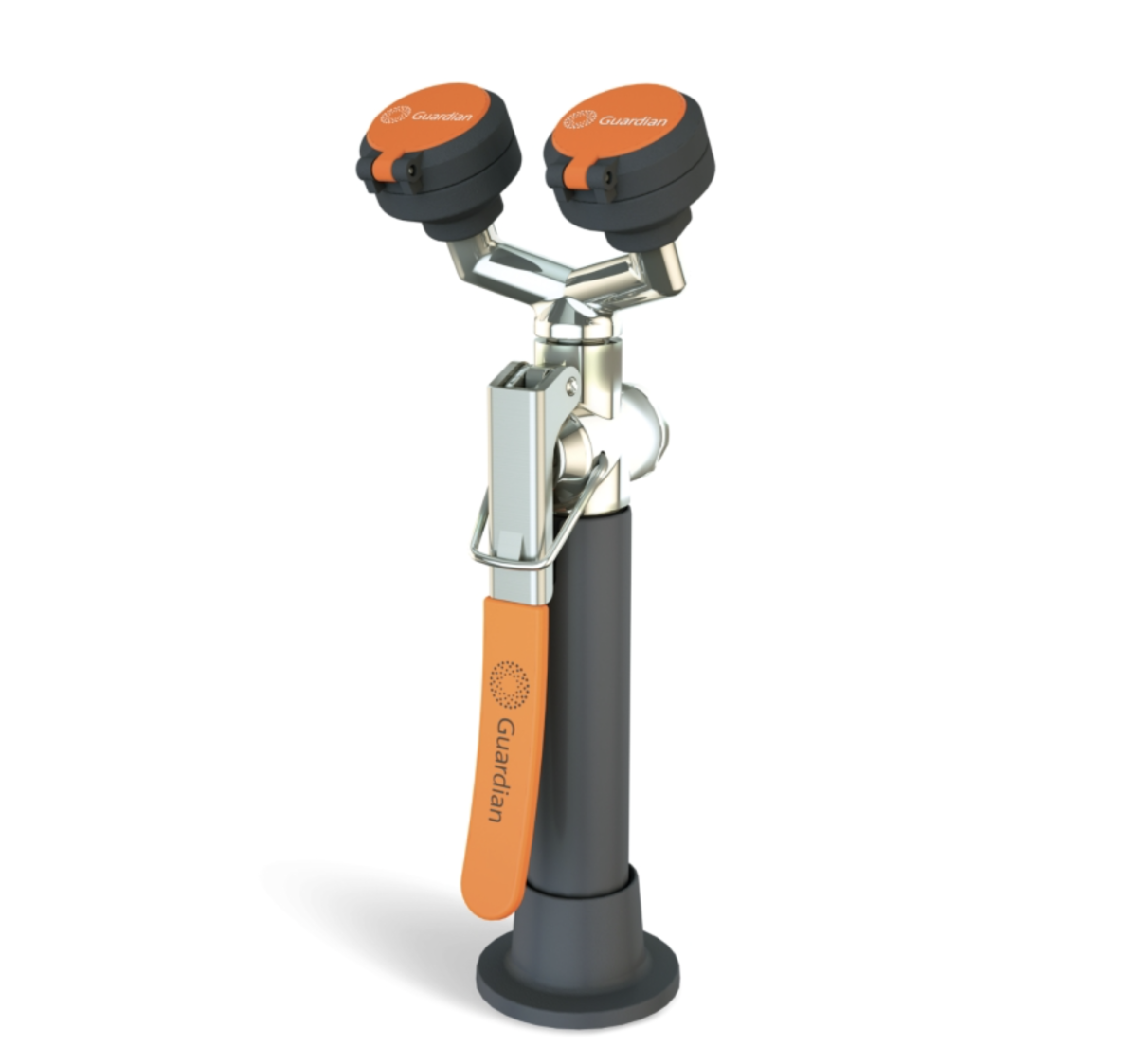
| Primary (15-min eye flush) | See instructions below in How to Conduct & Log Weekly Testing |
| Emergency Shower | 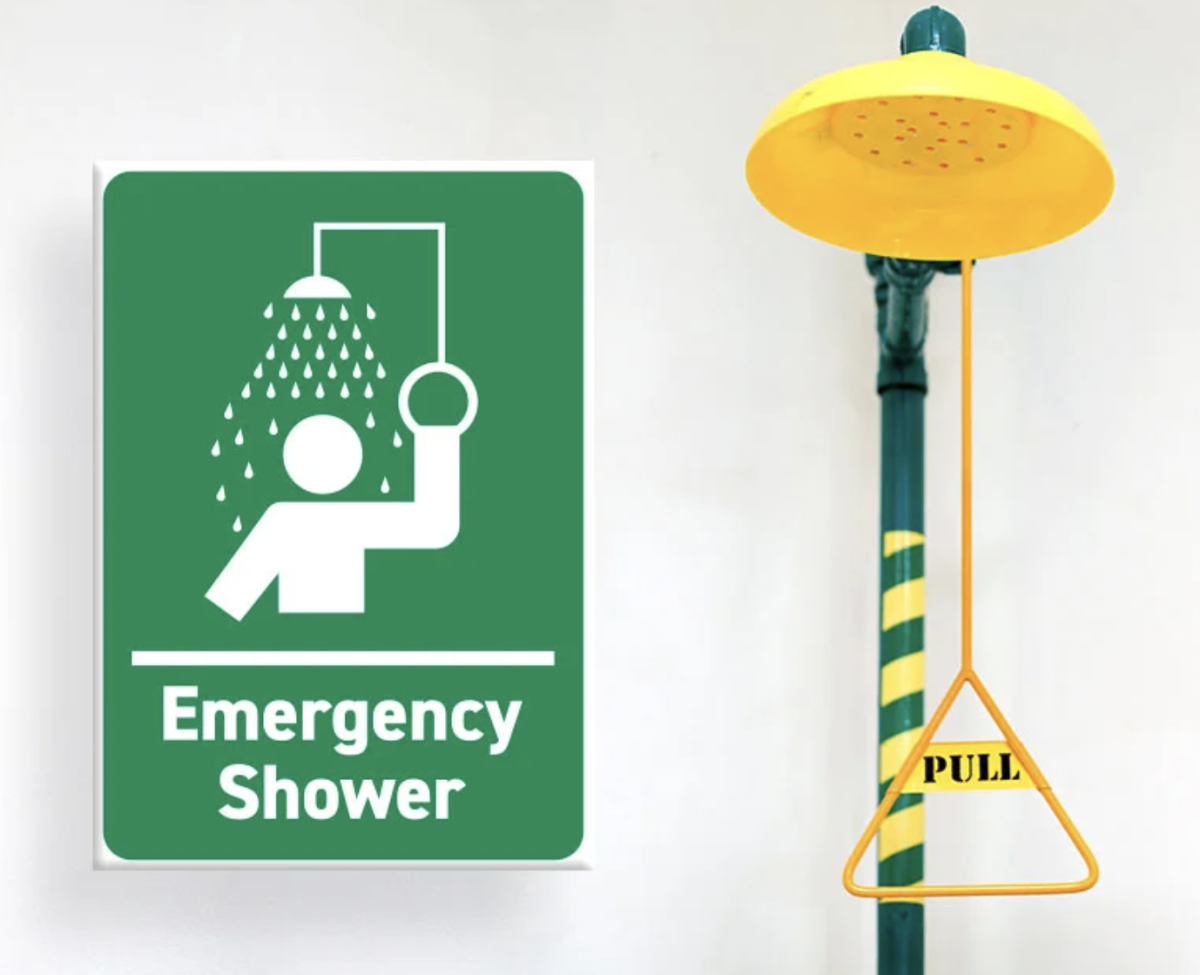
| Primary (15-min body flush) | See instructions below in How to Conduct & Log Weekly Testing |
Gravity-Fed Units
| 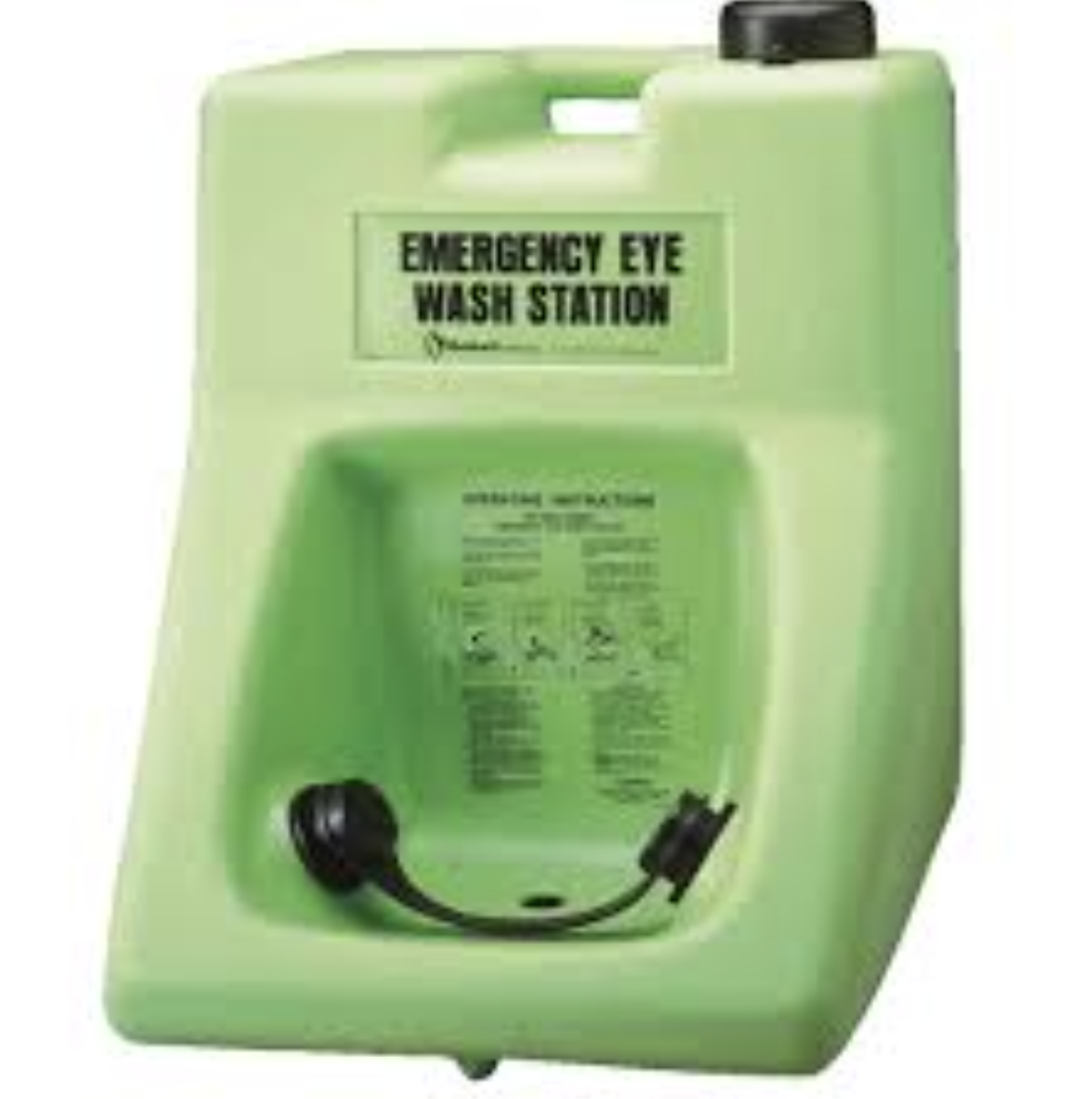
| Primary (15-min eye flush) | Weekly Visual Check: Verify fluid level, brief flow test, replace fluid every 120 days. |
Personal Bottles
| 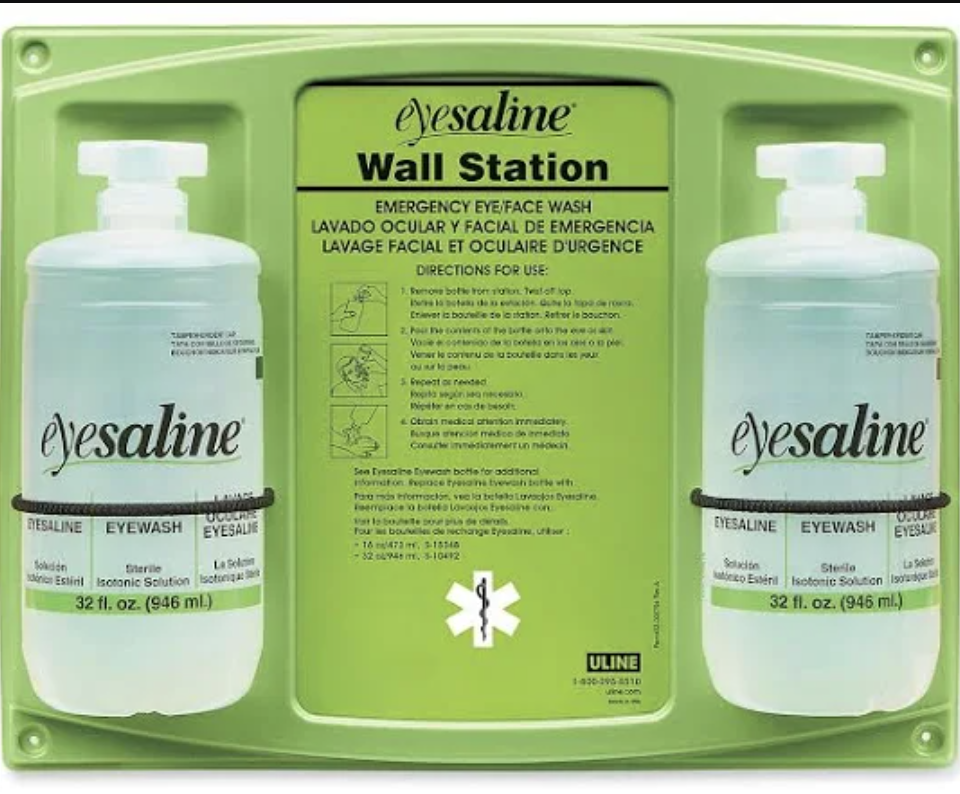
| Supplemental (En-route relief) | Monthly Inspection: Verify tamper seals are intact, confirm fluid level, replace before expiration date. DO NOT OPEN. |
How to Conduct & Log Weekly Testing (Plumbed Units)
- Access: Ensure the path and area surrounding the eyewash and shower are clear of obstructions.
- Containment: Place a testing curtain/funnel and 5-gallon bucket under the safety shower or eyewash if no floor drain is present.
- Activate: Push eyewash handle or pull shower rod fully. Dust covers should pop off eyewash nozzles automatically.
- Check Flow & Temp: Verify an even stream from eyewash nozzles and a full cone spray pattern from the shower at tepid water temperature (15–38°C / 60–100°F).
- Drainage: Run water long enough to clear sediment and ensure the drain clears properly.
- Sign Off: Date and initial the physical tag or submit the report via the digital inspection portal.
Reporting Issues
If an eyewash station fails inspection (e.g., low water pressure, missing dust covers, expired solution, or leaks), report the issue immediately to Facilities.