Overview
Lane Community College maintains Automated External Defibrillators (AEDs) and Naloxone (Narcan) nasal spray kits across campus locations to ensure rapid response during medical emergencies.
To streamline access during critical situations, every wall-mounted AED cabinet on campus is equipped with a Naloxone (Narcan) emergency kit alongside the defibrillator unit.
Emergency Equipment Purpose
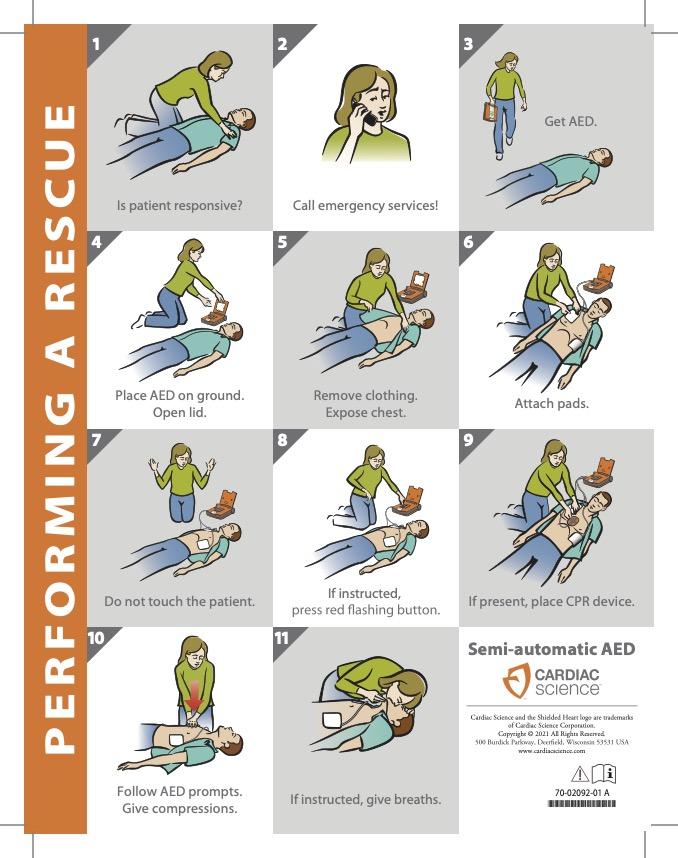
Automated External Defibrillators (AEDs): Portable electronic devices designed to diagnose and treat sudden cardiac arrest (SCA). AEDs provide clear, step-by-step audio visual prompts to guide any bystander through chest compressions and shock delivery if needed.
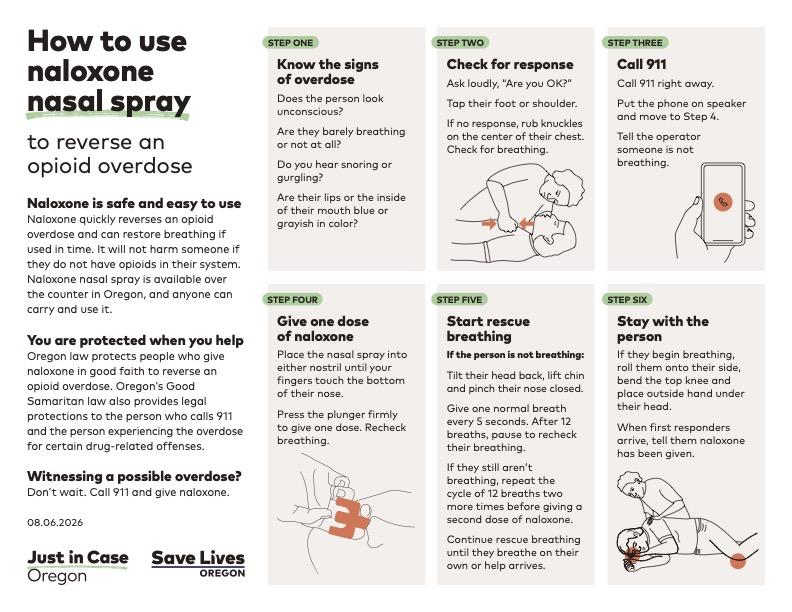
Naloxone (Narcan) Nasal Spray: A safe, needle-free medication that temporarily reverses the life-threatening effects of a known or suspected opioid overdose. Naloxone only works on opioids (such as fentanyl, heroin, or prescription pain medication) and will cause no harm if administered to someone who is not experiencing an opioid overdose.
Equipment Locations
Combined AED and Naloxone emergency stations are distributed across campus in major academic and administrative facilities, including on Main Campus in the Center Building, Buildings 1, 3, 5, 6, 8, 10, 12, 16, 18 (Health Clinic), 19, 24, 30, 31, 32, 33, and the outdoor Save Station near the athletic fields. Supplementing these fixed indoor and outdoor locations, mobile units are deployed with Public Safety response vehicles and with the Athletic Trainer. To pinpoint the station closest to you, refer to our interactive Campus Map for Main Campus.
LCC also has AEDs at our satellite campuses, Lane Aviation, Mary Spilde Downtown Center, Titan Court, KLCC, Florence Center and Cottage Grove Center.
Emergency Action Protocol
In the event of a medical emergency or unresponsive individual:
Call Public Safety & 911 Immediately:
Campus Public Safety Emergency: (541) 463-5555
911: Dial 911 for off-campus emergency responders.
Retrieve the Equipment: Send a bystander to get the nearest wall-mounted AED/Naloxone cabinet.
Administer Care:
For Cardiac Emergencies: Open the AED lid and follow the automated voice prompts.
For Suspected Overdose (Unresponsiveness / Shallow Breathing): Peel back the Naloxone package, insert the tip into one nostril, and press the plunger firmly until it clicks.
Remain with the Individual: Stay on site and assist the person until campus officers or emergency medical personnel arrive.
Contact & Maintenance
If an AED cabinet has been opened, an AED kit has been deployed, or Naloxone supplies need replenishment, notify Risk Management immediately:
- Dawn Barth, Manager of Risk and Benefits: barthd@lanecc.edu, 541-463-5503
- Ben Fahlgren, OSHA Compliance Coordinator: fahlgrenb@lanecc.edu, 541-463-5511
More Information
- Employee Training Resources in Vector (LCC's Employee Learning Management System)
- AED (Automated External Defibrillators)
- This course is designed to familiarize you with AEDs and how to administer first aid to someone who has collapsed and appears to be unconscious. We’ll discuss the steps to take if someone is unconscious, what an AED is, what it does, and how to use it. This course is designed to complement hands-on training.
- Cardiopulmonary Resuscitation (CPR)
- This course focuses on key CPR techniques, considerations, and precautions for all staff. Note: There are additional requirements to complete this course. This course is not intended to replace hands-on training for CPR. You must receive hands-on training from a qualified trainer.
- Medication Administration: Naloxone
- This course will help staff members recognize an opioid overdose and provide steps to administer naloxone.
- Opioid Overdose Response Awareness
- This course provides employees with an overview of opioid overdose response procedures and the usage, storage and maintenance of opioid reversal agents, such as naloxone.
- AED (Automated External Defibrillators)
- Other Resources
- How To Use Nasal Naloxone (English), Oregon Health Authority YouTube Video
- Just In Case Oregon is a partnership between the Oregon Health Authority (OHA) and community partners across the state that mails free naloxone directly to you, so you already have it before you need it. No trip, no explanation, no barrier.
- LCC Naloxone Memo