At LCC, the safety and inclusivity of our community are paramount. In the event of an emergency evacuation where elevators are compromised, designated personnel must be fully equipped to assist colleagues with mobility limitations.
LCC facilities are equipped with two distinct models of evacuation equipment: the manual Garaventa Evacu-Trac and the motorized Garaventa Power Evacu-Trac. Below is the official reference guide and training framework for both units.
Manual Model: Garaventa Evacu-Trac
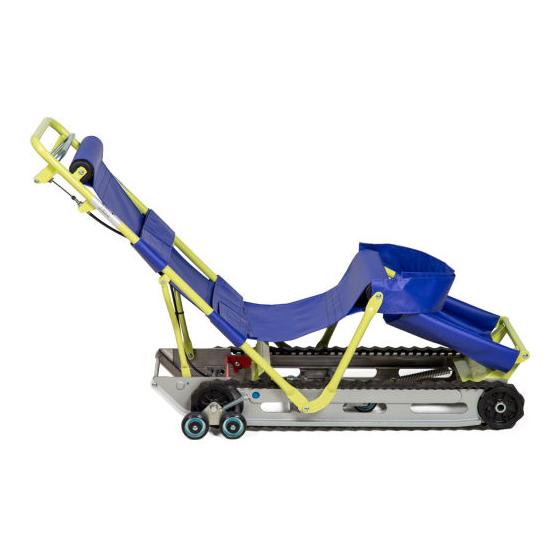
Designed for smooth, gravity-assisted descent on straight stairways controlled entirely by a single operator.
Quick Specifications & Restrictions:
- Maximum Weight Capacity: 180 kg (400 lbs).
- Stair Restrictions: Strictly prohibited on curved, spiral, irregular, or insecure staircases, or stairs with loose carpeting.
Essential Operational Checklist:
- The Blue Lock Check: When deploying the chair from its storage cabinet, pull the handle up in a quick, smooth motion. Always check the side indicator window—it must display BLUE to confirm the seat frame is securely locked.
- Securing Passengers: Tightly fasten the safety straps. If a passenger cannot keep their arms safely in their lap, wrap their arms inside the chest/torso straps.
- The Golden Rule of the Brake Cable: When moving horizontally on flat ground, always push down on the main handle before squeezing the Brake Release Bar to deploy the front wheels. Pulling the bar without pushing down first stretches and damages the internal brake cable.
- Stairway Entry: Align the unit at a 90° right angle to the stairs. Roll forward until the auxiliary wheels clear the top step, then immediately release the Brake Release Bar to engage the fail-safe Track Parking Brake before tilting the unit down onto the stairs.
- Descent Control: Squeeze the bar to descend. Feather your grip to control speed, and let go completely to bring the unit to a complete, locked stop mid-stairwell.
- Maintenance & Care: Clean the rubber tracks using only mild detergent and water. Never apply oil, grease, or any external lubricant to any part of the Evacu-Trac.
Motorized Model: Garaventa Power Evacu-Trac
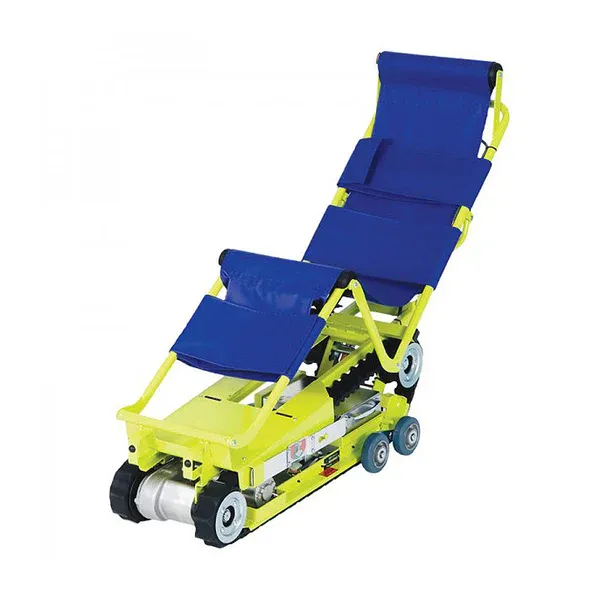
Battery-powered tracks designed for both motorized ascent (climbing up) and descent (going down) without manual lifting.
Quick Specifications & Restrictions:
- Maximum Weight Capacity: 136 kg (300 lbs).
- Stair Slope Indicator: Before operating, lay the indicator tool across two stair noses. Only operate if the reading falls in the Green or Yellow zones. NEVER operate on stairs indicating RED.
Essential Operational Checklist:
- The Kickstand Rule: As soon as you open the unit, immediately lower the red safety kickstand. This prevents the chair from tipping backward on flat ground while transferring the passenger.
- Balance Warning: When the kickstand is raised for travel, the operator must keep both hands securely on the handle at all times to balance the passenger's weight over the wheels.
- The Emergency Stop: Familiarize yourself with the red Emergency Stop Button. Depressing it cuts all motor power instantly. If deployed, it must be reset by twisting clockwise and requires a subsequent formal safety inspection.
- The "STOP" Line Alignment:
- For Ascent (Going Up): Guide the chair backward to the stairs. Stop climbing the moment the leading edge of the red "STOP" mark on the frame reaches the top stair nose before tilting back.
- For Descent (Going Down): Guide the chair forward. Align the red "STOP" mark with the top stair nose, release the switch, tilt the unit forward until the tracks grip the stairs, and resume operation.
- Battery Lifecycle: To prevent emergency power failures, the battery must be charged frequently. If a unit is in storage, it must be fully recharged every three months to maintain battery health.
- Special Cleaning Warning: While the exterior of the tracks can be cleaned with mild detergent, ensure no liquids or lubricants penetrate the inside of the tracks, as this will wash away specialized factory-applied grease.
Where to Find Evacuation Chairs
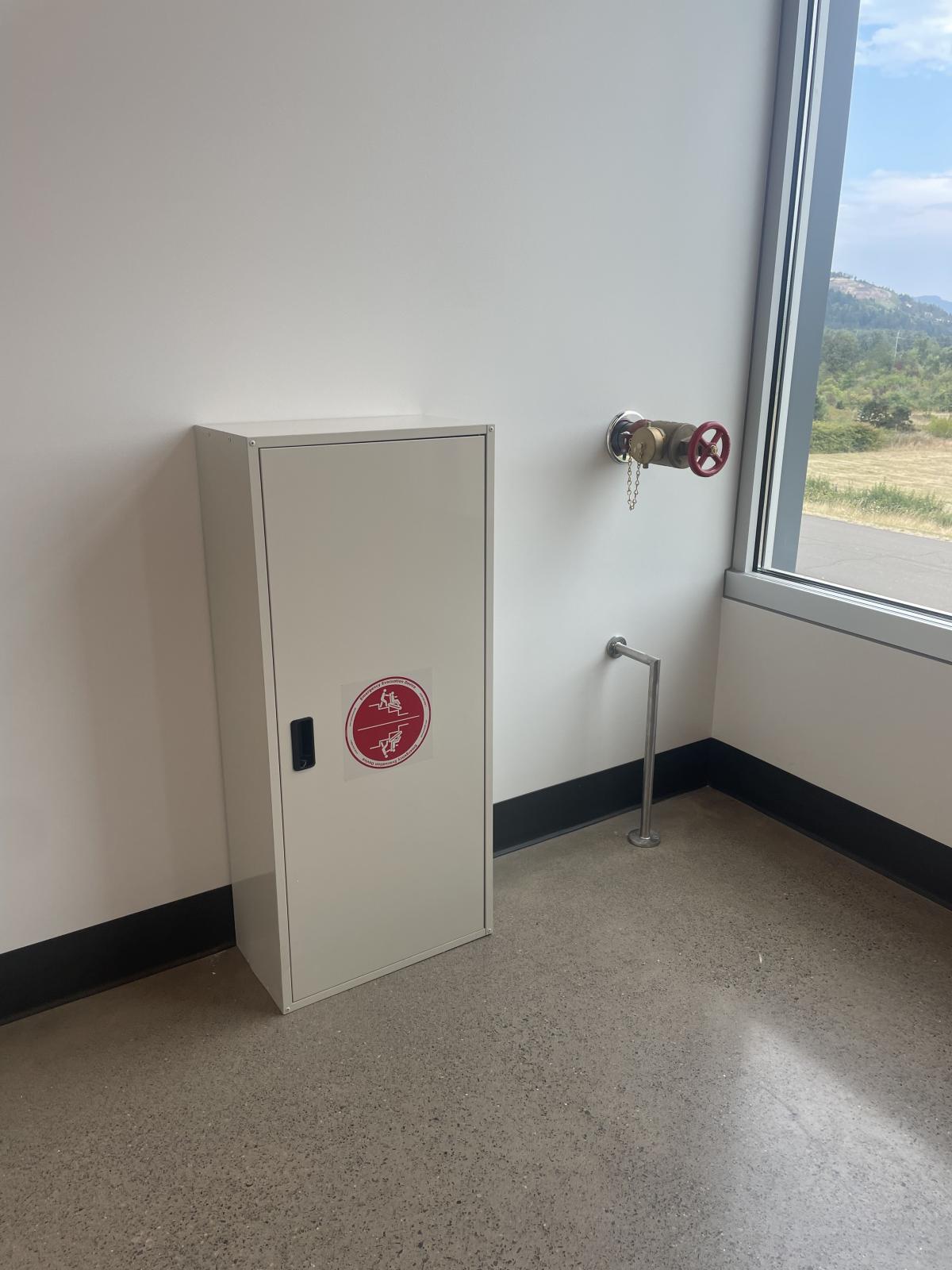
All evacuation chairs at LCC are stored in wall-mounted storage cabinets located directly adjacent to primary escape stairwells. The locations may be seen on the campus digital map here under the Emergency Resources section.
| Campus | Building | Location | Model |
|---|---|---|---|
| Main Campus (4000 E 30th Ave) | Center (LCC00) | South Stairwell on the 4th floor 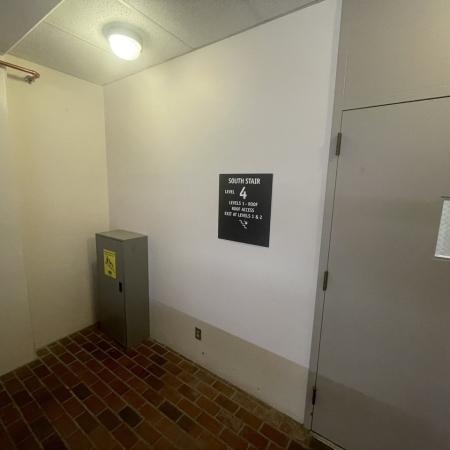
| Manual Model: Garaventa Evacu-Trac |
| Center (LCC00) | East side of the Basement. 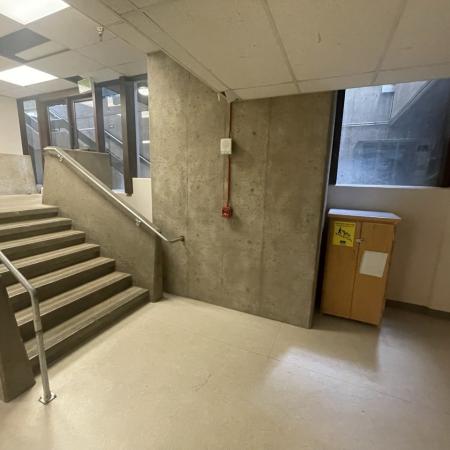
| Motorized Model: Garaventa Power Evacu-Trac | |
| Building 10 (LCC10) | Second floor adjacent to room 234. 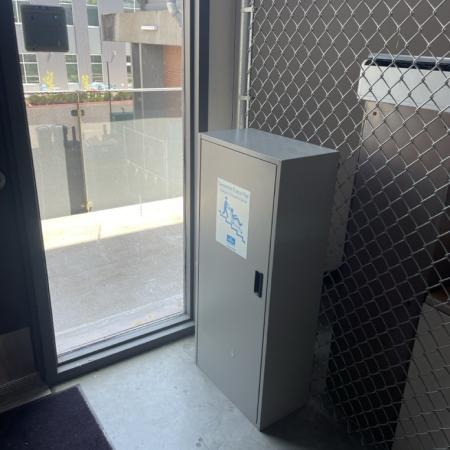
| Manual Model: Garaventa Evacu-Trac | |
| Building 32 Health Professions (LCC32) | Stair 2 on the East side of the building. Exit the door from the 4th floor into the stairwell, and go up 1 flight of stairs. 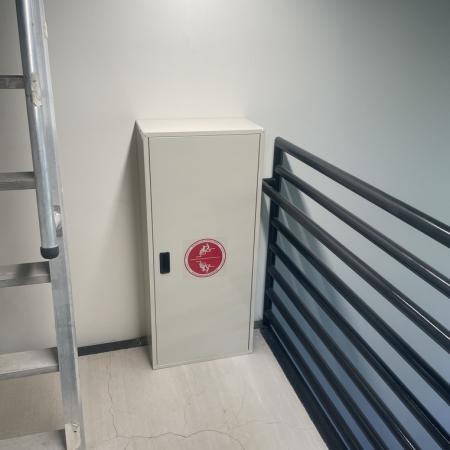
| Manual Model: Garaventa Evacu-Trac | |
| Building 33 Industry and Trades Education Center (LCC33) | In the 2nd floor stairwell on the East side of the building.
| Manual Model: Garaventa Evacu-Trac | |
| Downtown Campus | Academic (Mary Spilde) | In the 4th floor stairwell on the West side of the building. 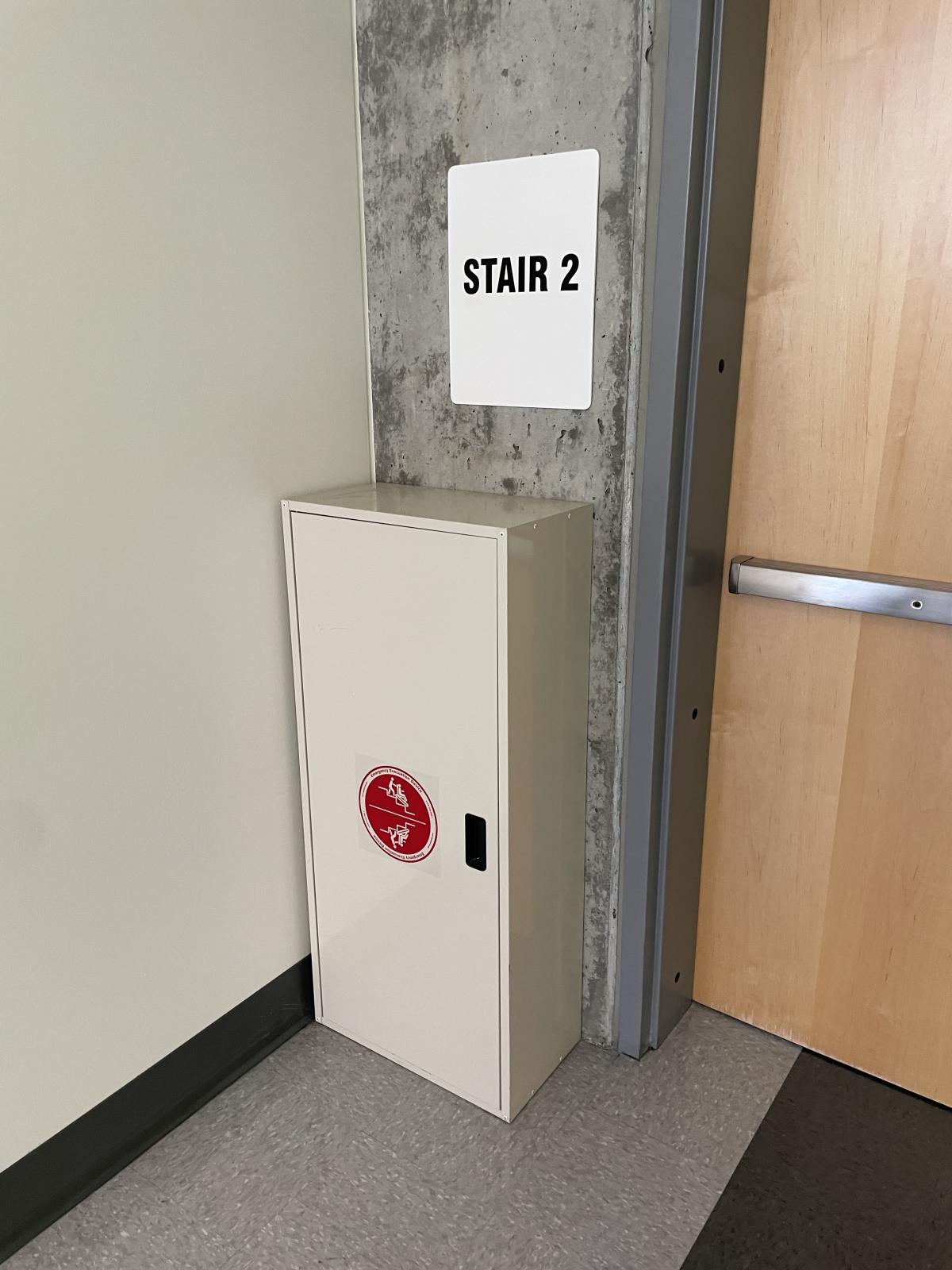
| Manual Model: Garaventa Evacu-Trac |
Mandatory Safety Requirements
- Footwear Policy: Anyone operating an evacuation chair during a drill or active emergency must wear flat-soled shoes with a reliable grip. High heels, sandals, or slippery footwear are strictly forbidden during operations.
- Practice: Because real-world evacuations happen infrequently, muscle memory is critical. LCC encourages those who work near the stairwells where Emergency Evacuation Chair (Evacu-Trac) units are placed to ensure operator confidence and passenger comfort.
Resources & Downloads
- Training Sign-Off Sheet — Must be printed, filled out, and signed by both the trainee and trainer upon completion of practical training.
- User Manuals
- Garaventa Evacu-Trac (Manual Model) Demonstration Video
- Questions or Training Requests? Contact Ben Fahlgren at fahlgrenb@lanecc.edu or ext 5511.